
Beyond Death: Science Discovers the ‘Third State’ of Life - What if Something Undead is Waiting for us to Land on Mars?
New actual scientific findings go far beyond residual function—they reveal an eerie, Frankenstein-esque capacity of cells to adapt, survive, and evolve after death.

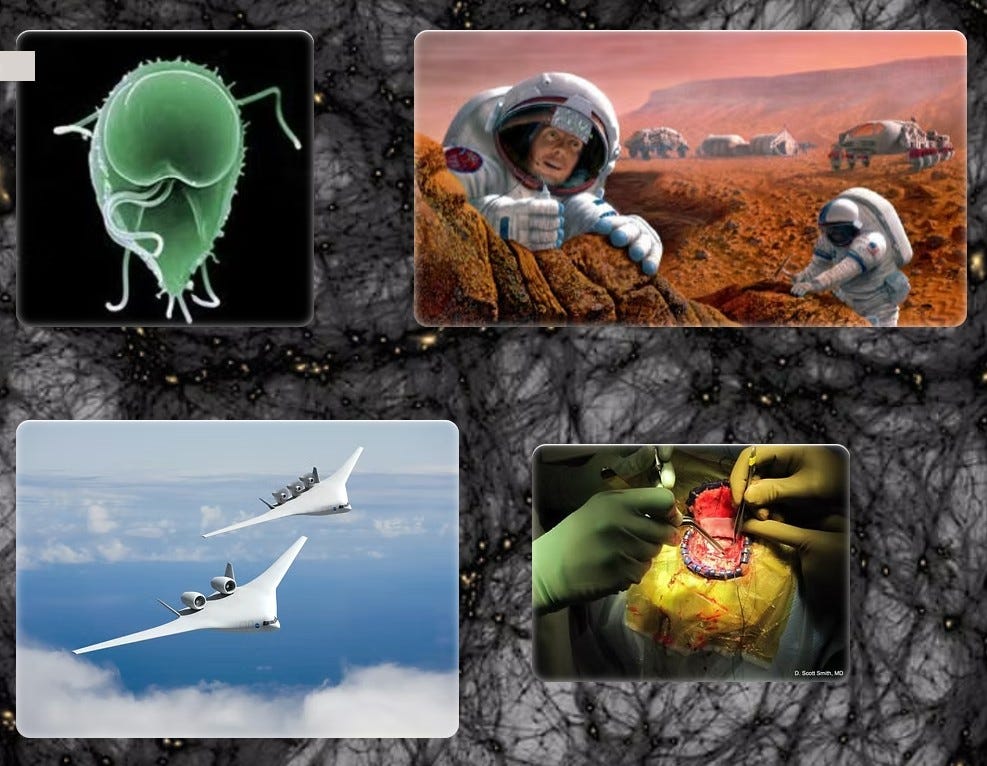
WASTELAND
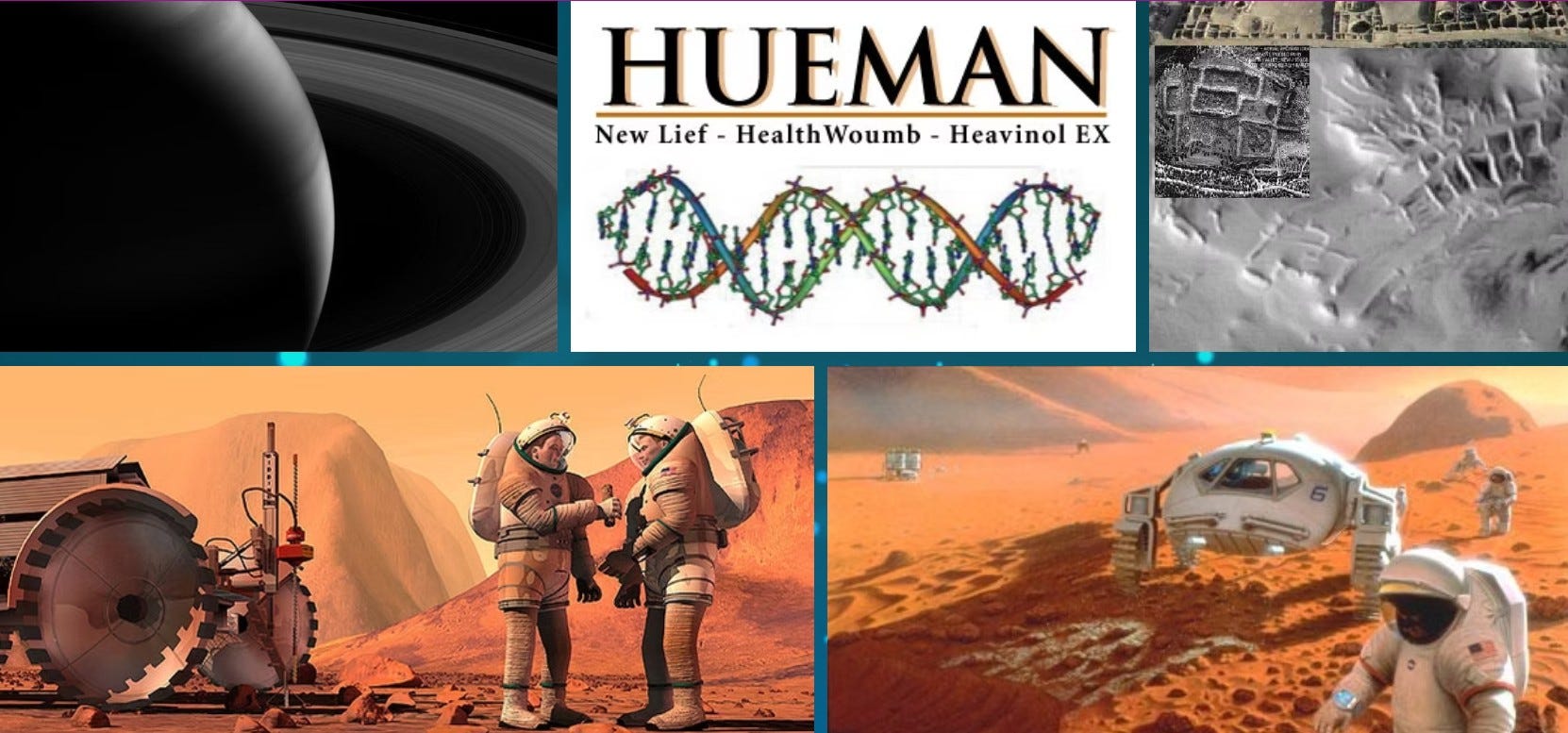
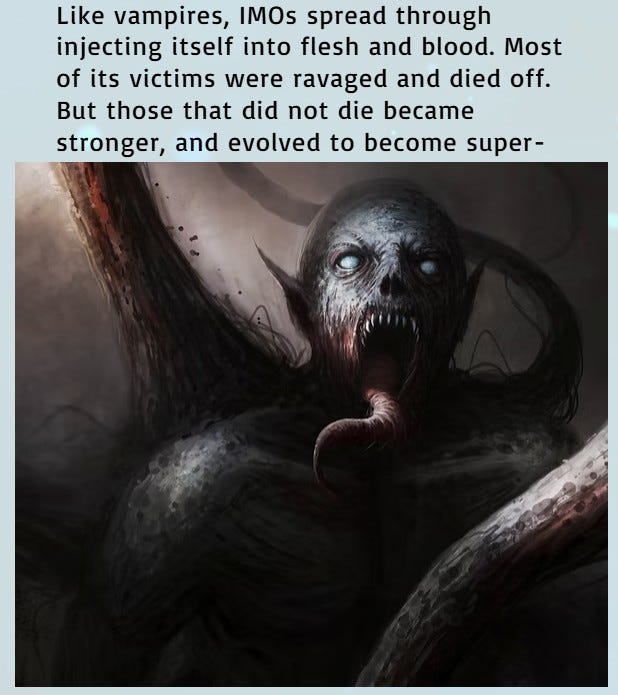
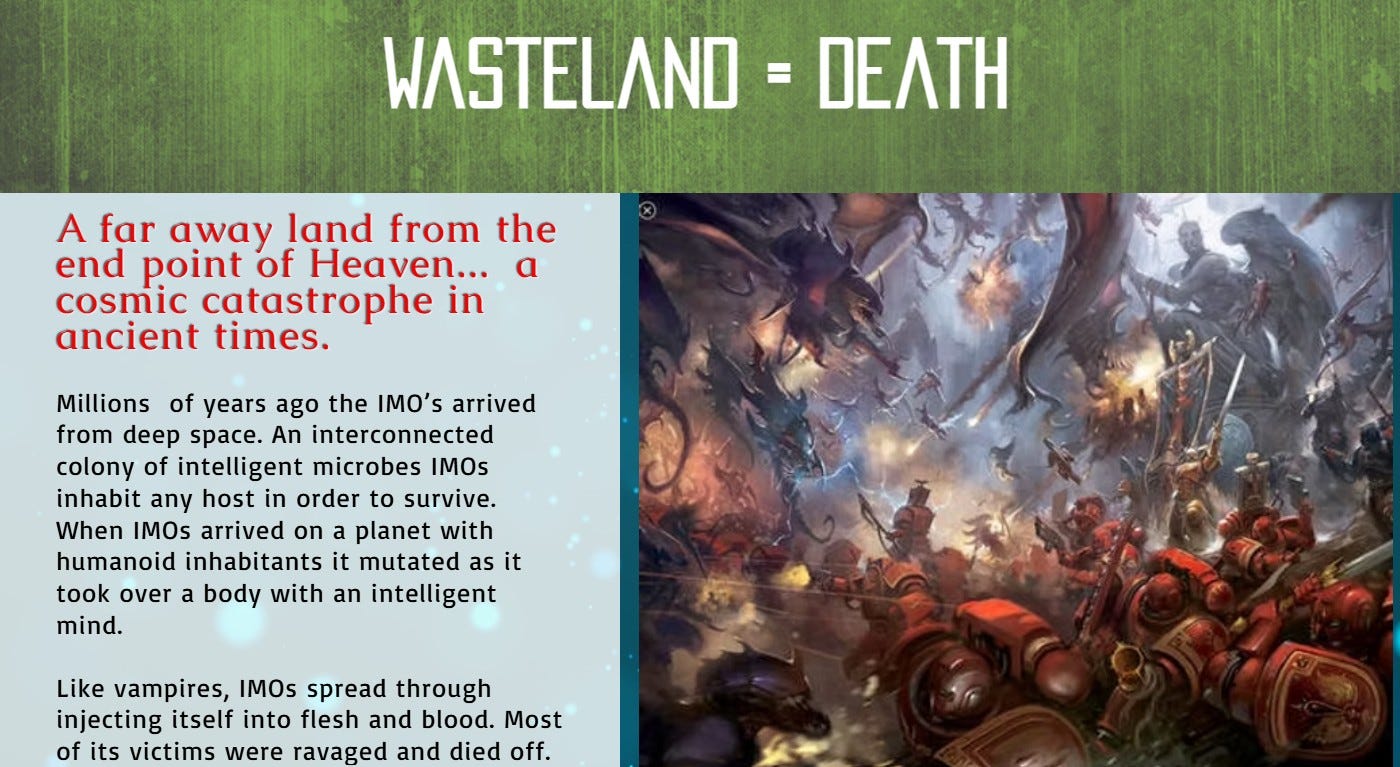
FICTION? In 2012 I developed the idea - Wasteland explores the possible future where human thought and memory are rapidly disappearing, Wasteland introduces the “IED” or Individual Eternity Device that we upload memories to, and share with others. The IED also delivers a serum called “Heavinol” developed by the Hueman Corporation in an attempt to stimulate changes in brain matter to both extract memories, and incept them. Hueman Corp scientists have discovered the cause of the rapid devolution of humankind is due to an Intelligent Micro Organism that infected explorers on Mars and takes over the brain passing by blood to other people causing them to act out the commands of the IMO which only has a single function: To pass itself on to new hosts.
SCIENCE: What truly defines the boundary between life and death? For centuries, science and philosophy have treated life and death as binary states—either an organism is alive or it is not. But new research is challenging this long-held view, proposing a remarkable concept: there exists a “third state” between life and death, where cells not only survive but may reorganize, develop new functions, and even exhibit a form of agency.
This astonishing notion is explored in a review published in Physiology by microbiologist Peter Noble (University of Alabama at Birmingham) and bioinformatics researcher Alex Pozhitkov (City of Hope Cancer Center). "Life and death are traditionally viewed as opposites," the researchers note. "However, the emergence of new multicellular lifeforms from the cells of a dead organism introduces a 'third state' that lies beyond the conventional boundaries of life and death."
Living Cells in Dead Bodies
It has long been understood that not every part of a body dies at once. Organ, tissue, and cell transplants depend on this fact. But the new findings go far beyond residual function—they reveal an eerie, Frankenstein-esque capacity of cells to adapt, survive, and evolve after death.
One of the most intriguing studies involved skin cells from deceased frogs, which spontaneously reorganized themselves into multicellular organisms dubbed xenobots. Far from simple cell clumps, these xenobots could move using hair-like cilia, collect materials, record environmental data, and even self-heal. In essence, they had taken on completely new roles beyond their original biological purpose.
More recently, similar phenomena have been observed in human lung cells, which under the right conditions assembled into motile multicellular entities called anthrobots. These anthrobots were capable of movement, self-repair, and interacting with nearby neurons—suggesting sophisticated behavior in what are technically “dead” systems.
The Third State: Not Alive, Not Dead
These remarkable observations suggest that under specific conditions—nutrients, oxygen, biochemical signals, or even bioelectricity—cells can enter a liminal biological state that defies our conventional understanding. This “third state” is not merely a slow decline into death but a potential gateway to transformation, perhaps even regeneration.
This state “demonstrates the inherent plasticity of cellular systems,” say Noble and Pozhitkov, and challenges the assumption that cellular development is strictly predetermined. Instead, death itself may play a role in biological evolution, unlocking dormant potential within cells.
Frankenstein Reimagined: Bioelectric Reanimation
While the phenomenon may sound like science fiction, researchers propose a few possible explanations. One idea, “reminiscent of Frankenstein-style theories,” involves hidden electrical circuits within cells that can be reactivated under the right conditions, essentially reanimating them. Another possibility is that, freed from the biochemical context of a living organism, cells begin to express genes that were previously silenced, taking on roles they were never meant to play in the organism's lifetime.
Conscious Cells?
Perhaps the most provocative implication of this research is the suggestion that cells may possess a form of “consciousness” or agency—a capacity to assess their environment, respond to changes, and make decisions independently. Though this is not consciousness in the human sense, it points to an emergent intelligence at the cellular level that allows survival and adaptation outside the organism's control.
If true, this could revolutionize how we understand biology, evolution, medicine, and even consciousness itself. It reopens fundamental questions: What is life? When does it begin—or end? And how much do we truly know about the forces animating the cells that make us?
In this new light, death is not the final chapter—it may be a strange and unexplored frontier where life redefines itself. Welcome to the “third state.”
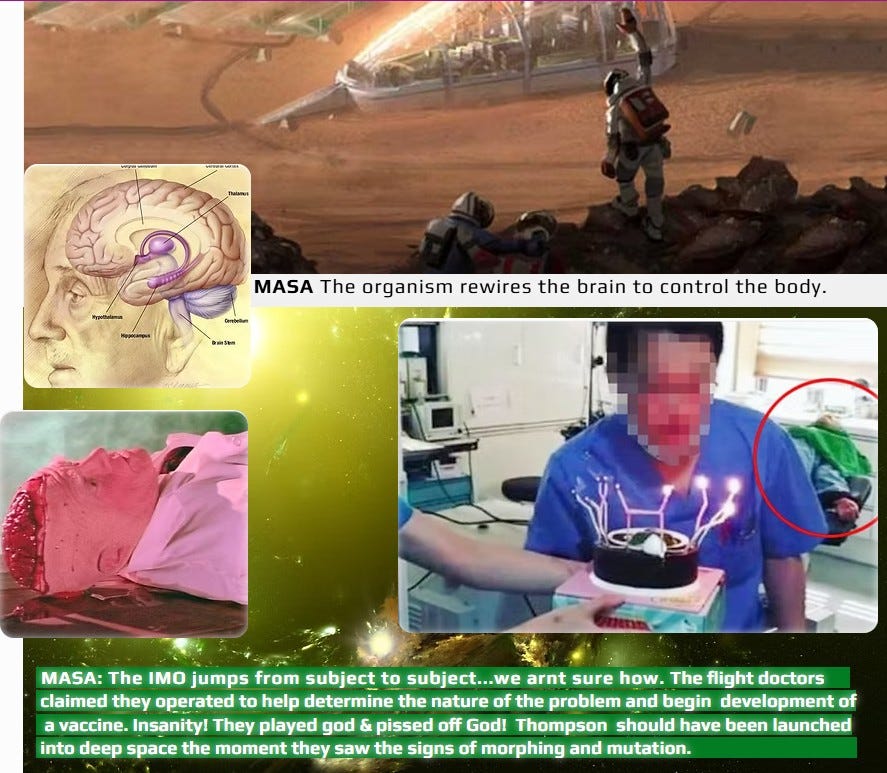
Welcome to Wasteland: Where Life Defies Death—and the Dead Reanimate
In the next 20 years, humanity makes its boldest leap yet: the first manned mission to Mars. What they find is not the red, lifeless wasteland we imagined—but something far stranger, and far older.
Beneath the Martian soil, where ice once glinted in satellite images, scientists uncover more than just evidence of water. They unwittingly disturb intelligent microbes—alien organisms that have survived eons by clinging to the last vestiges of microbial energy, feeding on trace life-forms just beneath the surface. These aren't just survivors—they are collective intelligences, ancient and adaptable, capable of infecting, learning, and evolving at a pace no human system can comprehend.
As the microbes spread, they begin to infiltrate not only human bodies but human technology, initiating a new chapter in biological evolution—one that calls into question everything we understand about life, death, and consciousness.
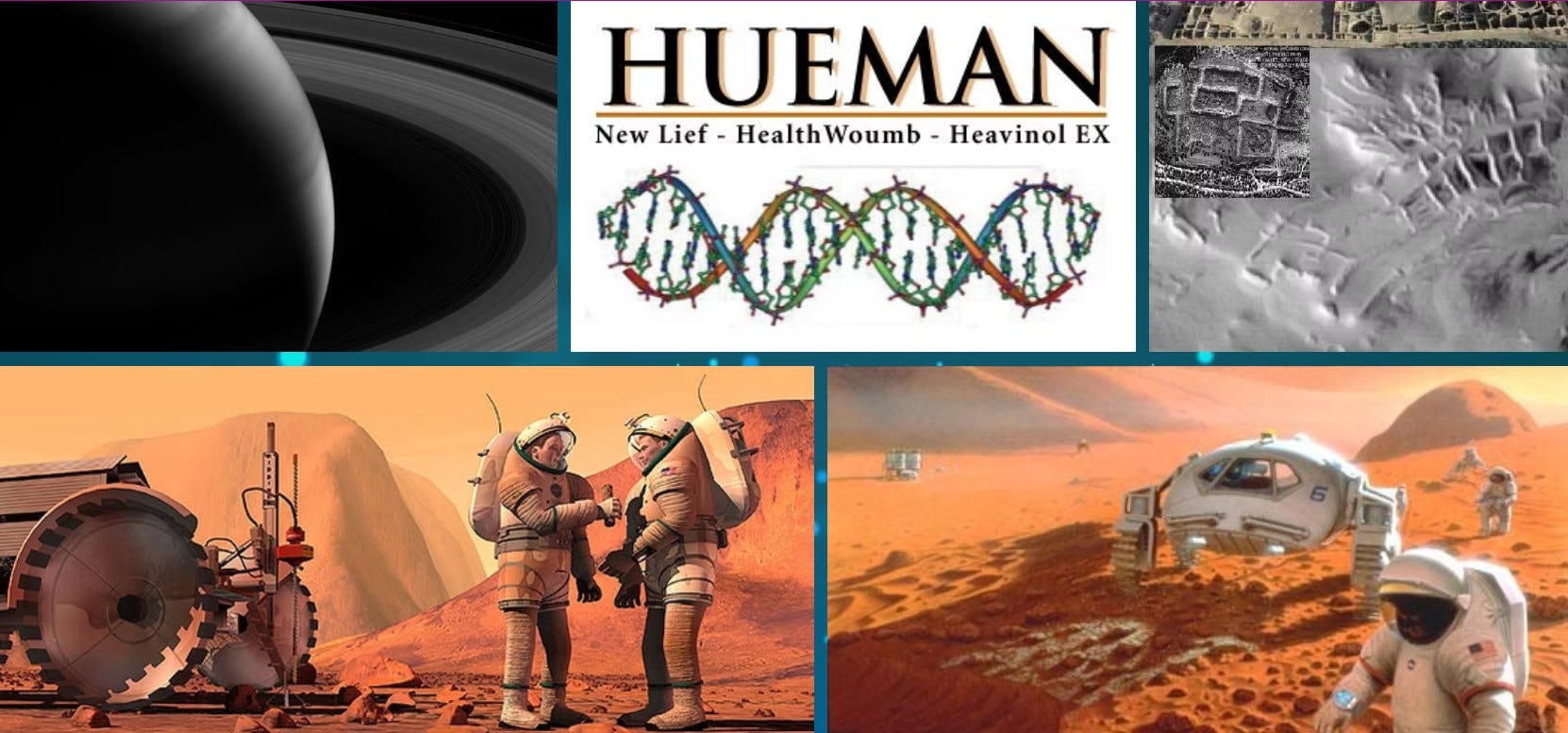
The Forgotten Architects of…
Wasteland, the chronicle of this chilling encounter, peels back the layers of planetary history to reveal a truth long buried: humans were never alone—and may not have even been the first intelligent beings to walk Earth.
According to Martian relics and encoded microbial memories unlocked by advanced quantum neuro-scan, humans are the legacy of giant humanoid beings who fled Mars during its collapse. Long ago, during a planetary plague caused by these very microbes, the Martian giants—once rulers of a vast civilization—escaped to Earth, leaving their red world behind, stripped of life.
Over millennia, their biological imprint—either through genetic manipulation or survival-driven evolution—would shape what we now recognize as Homo sapiens. Humanity, then, is not simply an Earth-born species, but a byproduct of Martian desperation and microbial catastrophe.
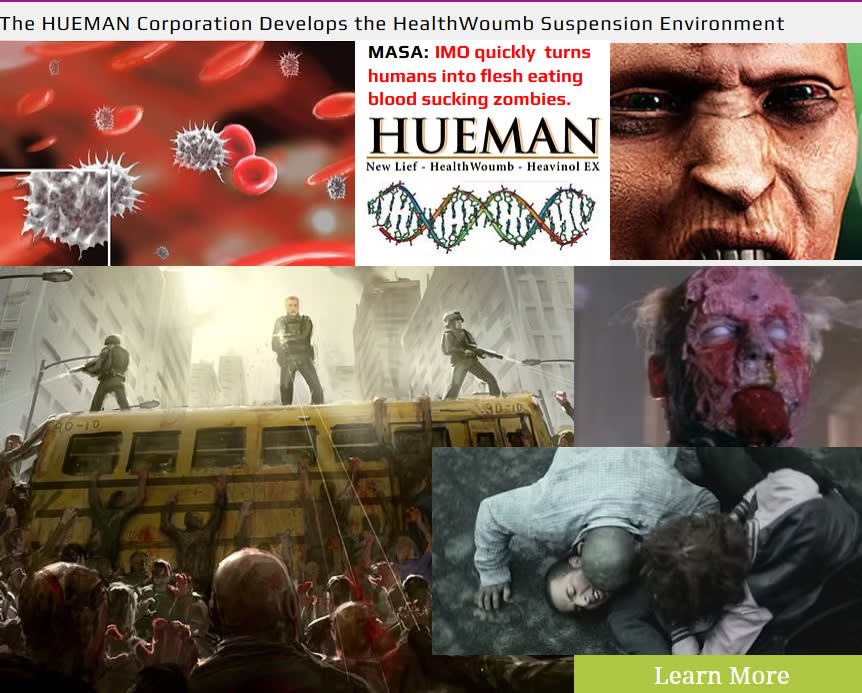
Life After Death: The Third State
This revelation ties directly into groundbreaking Earth-based research that had already begun to question the finality of death. Recent studies published in Physiology have demonstrated that cells in a dead organism can survive, reorganize, and even evolve new functions, creating a "third state"—a liminal realm between life and death.
Scientists observed skin cells from deceased frogs becoming xenobots—living, moving multicellular structures capable of self-healing, recording information, and adapting to their environment. Similarly, human lung cells transformed into anthrobots, small motile organisms that not only lived but repaired nearby tissue.
This "third state" hints at something even more profound: that cells themselves may possess a kind of proto-consciousness, a capacity for agency and decision-making, especially when liberated from the normal constraints of a living organism. It's in this eerie twilight—neither alive nor dead—that the line between biology and machine begins to blur.
The Rise of “Other” Consciousness
Wasteland dives headfirst into this frontier. As infected astronauts return to Earth, they begin to exhibit bizarre traits: fragments of memory not their own, the ability to communicate in unknown languages, and disturbing visions of ancient Martian architecture. Eventually, some develop non-human sensory awareness—suggesting their minds are becoming hybrids of human and microbial intelligence.
What emerges is not death, but transformation. Through bioelectric reanimation, genomic mutation, and a merging of mind and matter, the human body becomes host to a new form of consciousness—one that doesn’t rely on a single brain or nervous system. These microbial intelligences learn, build, and eventually create neural networks within living and dead tissue alike.
They are not parasites. They are explorers, long lost and now returning—through us.
A New Definition of Life
The story of Wasteland is more than science fiction—it is a meditation on a real, evolving scientific truth: life is not binary. The notion of a "third state" redefines not only death but our assumptions about self, agency, and the continuity of consciousness. Whether in lab-grown xenobots or resurrected Martian microbes, we see the same theme: life is fluid, and the death of one form may be the birth of another.
“Organismal death may play a significant role in how life transforms over time,” wrote researchers Peter Noble and Alex Pozhitkov. And now, that transformation may be taking us back—to where we began. Mars. A graveyard. A seedbed.
In the shadow of planetary extinction and microbial intelligence, humanity is forced to confront the most profound question of all: What if death is not the end, but merely the beginning of something else?
Welcome to the third state—
Where life defies logic, memory haunts the cells,
And the dead are not gone.


https://www.realdinge.com/podcast/time-brian-runway-25-with-david-masters-dingecast/
I don't think we can ever truly know the potential of the human body